Faudzil @ Ajak

Always think how to do things differently. - Faudzil Harun@Ajak
Showing posts with label PEOPLE - HOMELESS. Show all posts
Showing posts with label PEOPLE - HOMELESS. Show all posts
29 September 2014
PHILIPPINE - MM has world’s highest homeless population

(The Philippine Star) | Updated May 6, 2014 - 12:00am
MANILA, Philippines - Metro Manila has the highest homeless population in the world, according to an online site that compiles what it describes as “lesser-known intriguing information on a variety of subjects.”
A list of “25 Cities With Extremely High Homeless Populations” posted by List25.com on its website on April 29 showed that 22.8 million people, including 1.2 million children, are residing in slums in Metro Manila.
List25.com also said 300,000 more people are reported to have gone homeless following recent calamities that hit the Philippines.
The Unites States has the most number of homeless populations with 11 cities, it reported.
The descriptions about the 25 cities’ homeless were written by Juan Castillo, who has a Bachelor in Design from the University of Florida with a major in Architecture.
Castillo is currently working on an urban regional planning masters project.
He said the information on the number of homeless is based on statistics released by the United Nations Commission on Human Rights, which reported that around 100 million people worldwide are homeless.
The List25.com’s “25 Cities With Extremely High Homeless Populations” are as follows: Metro Manila; New York City; Los Angeles; Moscow; Mexico City; Jakarta; Mumbai; Buenos Aires (Argentina); Budapest (Hungary); Sao Paulo (Brazil);
San Francisco; Seattle (Washington); Athens; San Diego (California); Tampa (Florida); Rome; Washington; Chicago; Tokyo; Baltimore (Maryland); Rio de Janeiro; Dublin (Ireland); Indianapolis (Indiana); Denver (Colorado) and Lisbon (Portugal).
Source: http://www.philstar.com/
8 October 2013
HOMELESS WORLDWIDE - An Estimated 100 Million People Worldwide are Homeless

AN ESTIMATED 100 MILLION PEOPLE WORLDWIDE ARE HOMELESS. SOURCE: UNITED NATIONS COMMISSION ON HUMAN RIGHTS, 2005.
Worldwide
An estimated 100 million people are homeless worldwide
Source: United Nations Commission on Human Rights, 2005
Source: United Nations Commission on Human Rights, 2005
Europe
An estimated 3 million people are homeless in Europe
Source: Red de Apoyo a la Integración Sociolaboral (RAIS) 2010
Source: Red de Apoyo a la Integración Sociolaboral (RAIS) 2010
Argentina
An estimated 15,000 people are homeless in Buenos Aires
An estimated 4,500 children are homeless in Buenos Aires
Source: Red Solidaria
An estimated 4,500 children are homeless in Buenos Aires
Source: Red Solidaria
Australia
100,000 people sleep on the streets of Australia everyday
Source: Australian Bureau of Statistics, 2003.
An estimated 105,000 people are homeless in Australia.
Approximately 44% of homeless people in Australia are female
Approximately 12% of homeless people in Australia are children under the age of 12
Source: http://www.homelessnessaustralia.org.au, 2009
Source: Australian Bureau of Statistics, 2003.
An estimated 105,000 people are homeless in Australia.
Approximately 44% of homeless people in Australia are female
Approximately 12% of homeless people in Australia are children under the age of 12
Source: http://www.homelessnessaustralia.org.au, 2009
Austria
It is estimated that more than 2000 people sleep rough every night in Austria
Approximately 12,000 people are accommodated by homeless facilities in Austria
Source: Feantsa
Approximately 12,000 people are accommodated by homeless facilities in Austria
Source: Feantsa
Belgium
An estimated 1,200 people are homeless in Brussels
Source: De Decker, 2001
Source: De Decker, 2001
Brazil
In Brazil, there is a deficit of 6.6 Million housing units, equalling 20 million homeless people, who live in favelas, shared clandestine rooms, hovels or under bridges and viaducts, or are squatters, in some of the country's largest cities
Source: Brazil 2000 census
An estimated 2,500 people are homeless in Rio de Janiero
An estimated 10,000 people sleep rough in Sao Paulo
Half of the population of Sao Paulo live in informal shelter
Source: Brazil’s Economic Research Institute Foundation, 2003
Source: Brazil 2000 census
An estimated 2,500 people are homeless in Rio de Janiero
An estimated 10,000 people sleep rough in Sao Paulo
Half of the population of Sao Paulo live in informal shelter
Source: Brazil’s Economic Research Institute Foundation, 2003
Canada
Supporting Canda's homeless population costs Canadian Tax Payers CAD$6 billion a year
Source: International Journal of Psychosocial Rehabilitation, 2008.
Women and Children are the fastest growing group of those who are homeless in Canada
Source: Women’s Housing Advocacy Group, 2003
There are 6,100 homeless people in Ontario
There are 3,365 homeless people in Quebec
Source: www.thamesresearch.org.uk/news-and-views/homelessness-facts-and-figures/
There are 200,000 Homeless people in Canada.
Source: International Journal of Psychosocial Rehabilitation, 2008.
Source: International Journal of Psychosocial Rehabilitation, 2008.
Women and Children are the fastest growing group of those who are homeless in Canada
Source: Women’s Housing Advocacy Group, 2003
There are 6,100 homeless people in Ontario
There are 3,365 homeless people in Quebec
Source: www.thamesresearch.org.uk/news-and-views/homelessness-facts-and-figures/
There are 200,000 Homeless people in Canada.
Source: International Journal of Psychosocial Rehabilitation, 2008.
Columbia
There are an estimated 9,654,722 homeless people in Columbia.
Source: http://www.eclac.org/cgi-bin/getProd.asp?xml=/publicaciones/xml/5/3030
Source: http://www.eclac.org/cgi-bin/getProd.asp?xml=/publicaciones/xml/5/3030
Croatia
An estimated 2,285 people are displaced as a result of conflict in Croatia
Source: UN figures 0 2402 UNHCR (June 2009)
Source: UN figures 0 2402 UNHCR (June 2009)
Finland
An estimated 7,600 people are homeless in Finland
Approximately half of homeless people in Finland live in the Greater Helsinki area
Source: European Federation of National organisations working with the Homeless (FIANCE) 2010
Approximately half of homeless people in Finland live in the Greater Helsinki area
Source: European Federation of National organisations working with the Homeless (FIANCE) 2010
France
An estimated 1 million people are homeless in France
An estimated 100,000 people live on the streets in France
Source: http://www.emmaus-france.org.uk, 2007
An estimated 100,000 people live on the streets in France
Source: http://www.emmaus-france.org.uk, 2007
Germany
An estimated 254,000 people are homeless in Germany
Approximately 25% are women
Approximately 11% are children and young people
Source: European Federation of National organisations working with the Homeless (FIANCE)
Approximately 25% are women
Approximately 11% are children and young people
Source: European Federation of National organisations working with the Homeless (FIANCE)
Greece
Homelessness in Greece has risen from 17,000 in 2009 to 20,000 in 2010
An estimated 9,000 people are homeless in Athens
Source: European Observatory on Homelessness
An estimated 9,000 people are homeless in Athens
Source: European Observatory on Homelessness
Hong Kong
52.7% of homeless people are aged 49 or over in Hong Kong
18% of homeless people have not received a formal education in Hong Kong.
Source: Project on Helping Street Sleepers - Paper of LegCo Welfare Panel (2004)
18% of homeless people have not received a formal education in Hong Kong.
Source: Project on Helping Street Sleepers - Paper of LegCo Welfare Panel (2004)
Hungary
Approximately 10,000 people are homeless in Budapest
Source: Estimating the Size of Homeless Population in Budapest, Hungary David Beata
Source: Estimating the Size of Homeless Population in Budapest, Hungary David Beata
India
In 2003, there were 78 million homeless people in India
Source: Action Aid, 2003
India is home to 63% of all slum dwellers in South Asia
Source: http://www.slumdogs.org, UNHABITAT, 2007
Source: Action Aid, 2003
India is home to 63% of all slum dwellers in South Asia
Source: http://www.slumdogs.org, UNHABITAT, 2007
Indonesia
There are 3,000,000 homeless people in Indonesia
Source: www.achr.net/indonesia.htm
An estimated 28,364 people are homeless in Jakata
Source: 2001 Census
Source: www.achr.net/indonesia.htm
An estimated 28,364 people are homeless in Jakata
Source: 2001 Census
Ireland
An estimated 2366 people are homeless in Dublin every night
Source:http://www.combatpoverty.ie/povertyinireland/homelessness.htm, 2008
Source:http://www.combatpoverty.ie/povertyinireland/homelessness.htm, 2008
Italy
An estimated 7,000 people are homeless in Rome
Italy has no official, legal definition of homelessness
An estimated 17,000 people are homeless in Italy
Source: http://www.wantedinrome.com/news/news.php?id_n=3559
Italy has no official, legal definition of homelessness
An estimated 17,000 people are homeless in Italy
Source: http://www.wantedinrome.com/news/news.php?id_n=3559
Ivory Coast
An estimated 40,000 people are homeless in the western Ivory Coast
Japan
An estimated 25,296 people are homeless in Japan
An estimated 5,000 people are homeless in Tokyo
Source: www.street-papers.org/case-studies-asia, 2006
An estimated 5,000 people are homeless in Tokyo
Source: www.street-papers.org/case-studies-asia, 2006
Lithuania
There are 1,250 homeless people in Lithuania
Source: Homelessness in Lithuania: An Outline of the Situation for FEANTSA
Source: Homelessness in Lithuania: An Outline of the Situation for FEANTSA
Malawi
An estimated 90% of Malawi’s urban population live under slum conditions
Source: http://www.homeless-international.org/standard_1.aspx?id=1:28496&id=0:276&id=0:262
Source: http://www.homeless-international.org/standard_1.aspx?id=1:28496&id=0:276&id=0:262
Mexico
In Mexico City an estimated 40% of people live in informal housing
Source: www.unhabitat.org
Source: www.unhabitat.org
Namibia
More than 70,000 people live in shack settlements in Namibia
Source: http://www.homeless-international.org/standard_1.aspx?doc=1:26148&id=1:28813&id=1:28652&id=1:28486&id=0:262
Source: http://www.homeless-international.org/standard_1.aspx?doc=1:26148&id=1:28813&id=1:28652&id=1:28486&id=0:262
Netherlands
An estimated 30,000 people are homeless in the Netherlands
Source: http://www.feantsa.org/code/en/country.asp?ID=12&Page=22
Source: http://www.feantsa.org/code/en/country.asp?ID=12&Page=22
Nigeria
By 2015, there will be an estimated homeless population of 24.4 million people in Nigeria
http://www.unhcr.org/statistics/STATISTICS/4852366f2.pdf
http://www.unhcr.org/statistics/STATISTICS/4852366f2.pdf
Palestine
An estimated 24,145 Palestinian homes have been demolished in the Occupied Territories since 1967
Source: http://news.bbc.co.uk/1/hi/world/middle_east/7839075.stm
Source: http://news.bbc.co.uk/1/hi/world/middle_east/7839075.stm
Philippines
32.8million, 40% of the population in Philippines, live in slums
Source: Homeless International, 2008
An estimated 1,200,000 children live on the streets in the Philippines
Source: http://www.unhabitat.org
Source: Homeless International, 2008
An estimated 1,200,000 children live on the streets in the Philippines
Source: http://www.unhabitat.org
Portugal
Most homeless people live in metropolitan areas such as Lisbon and Porto.
Source: European Federation of National organisations working with the Homeless (FIANCE) 2010
Source: European Federation of National organisations working with the Homeless (FIANCE) 2010
Russia
An estimated 5 million people are homeless in Russia
An estimated 1 million children are homeless in Russia
Approximately 3.4%of the population is homeless
Source: Russian Interior Ministry, 2008
An estimated 1 million children are homeless in Russia
Approximately 3.4%of the population is homeless
Source: Russian Interior Ministry, 2008
Scotland
40,123 homeless applications accepted in 2008-09
More than 50% are asked to leave their accommodation following domestic issues
Source:http://scotland.shelter.org.uk/housing_issues/research_and_statistics/key_statistics/homelessness_facts_and_research
More than 50% are asked to leave their accommodation following domestic issues
Source:http://scotland.shelter.org.uk/housing_issues/research_and_statistics/key_statistics/homelessness_facts_and_research
Spain
An estimated 39,654 people are homeless in Spain
An estimated 6,190 sleep on the streets
Source: Red de Apoyo a la Integración Sociolaboral (RAIS) 2010
An estimated 6,190 sleep on the streets
Source: Red de Apoyo a la Integración Sociolaboral (RAIS) 2010
Sweden
Around 17,800 people are homeless in Sweden
Source: Swedish Home Office 2010
Source: Swedish Home Office 2010
United Kingdom
The UK has one of the highest levels of homelessness in Europe with more than 4 people per 1,000 estimated to be homeless
Source: Homeless Pages, 2004.
The average life expectancy of a Homeless Person in the UK is 42 years, compared to the national average of 74 for men and 79 for women. This is lower than the life expectancy of Ethiopia or the Democratic Republic of the Congo)
Source: “Still Dying for a Home” – Crisis, 1996.
In the UK there are 10,459 rough sleepers and 98,750 households in temporary accommodation
Source: Department for Communities and Local Government, 2005
Homelessness costs London £38.9 million a year in lost economic development and costs to its justice and health-care communities, and a much higher toll in human lives
Source: University of Western Ontario, 2003
The estimated cost for one homeless person in the UK to be provided accommodation and other support services is £15,000 per year
Source: Homeless Link UK, 2008
Statistics indicate that 63% of homeless women in the UK have experienced domestic violence and 40% have been sexually abused
Source: Homeless Link, 2007
Source: Homeless Pages, 2004.
The average life expectancy of a Homeless Person in the UK is 42 years, compared to the national average of 74 for men and 79 for women. This is lower than the life expectancy of Ethiopia or the Democratic Republic of the Congo)
Source: “Still Dying for a Home” – Crisis, 1996.
In the UK there are 10,459 rough sleepers and 98,750 households in temporary accommodation
Source: Department for Communities and Local Government, 2005
Homelessness costs London £38.9 million a year in lost economic development and costs to its justice and health-care communities, and a much higher toll in human lives
Source: University of Western Ontario, 2003
The estimated cost for one homeless person in the UK to be provided accommodation and other support services is £15,000 per year
Source: Homeless Link UK, 2008
Statistics indicate that 63% of homeless women in the UK have experienced domestic violence and 40% have been sexually abused
Source: Homeless Link, 2007
USA
Estimated homeless figures in the United States range from 600,000 to 2.5 million
Source: http://www.fas.org, 2009
Source: http://www.fas.org, 2009
1.37 million of the total homeless population in USA are children under the age of 18. 40% are families with children, 41% are single males, 14% are single females
Source: International Journal of Psychosocial Research, 2008
Source: International Journal of Psychosocial Research, 2008
Research by Dennis Culhane, University of Pennsylvania, followed thousands of homeless people in New York and each of them used an average of $40,000 a year in public services, such as increased health care.
Source: University of Pennsylvania
Source: University of Pennsylvania
Wales
An estimated 1,475 households are homeless in Wales
Source: http://news.bbc.co.uk/1/hi/wales/wales_politics/8270906.stm
Source: http://news.bbc.co.uk/1/hi/wales/wales_politics/8270906.stm
MALAYSIA - 50 years on, the homeless remain voiceless
50 years on, the homeless remain voiceless
BY MUZLIZA MUSTAFASEPTEMBER 16, 2013
LATEST UPDATE: SEPTEMBER 16, 2013 07:26 PM

As Malaysia’s 50th birthday celebrations and tributes to the nation’s founding fathers continue, there remains a neglected section of the populace with its own story to tell.
With neither a roof to call their own nor permanent jobs, folks in this group make up the homeless – and the forgotten – among us.
Along, 32, is one such person. Hailing from Perak, Along moved to the capital in 2008 in search of greener pastures but sadly, ended up in the gutter.
In the five years since, he has done all kinds of jobs, from security guard to helping at restaurants, but nothing permanent - forcing him to live on the street whenever he was out of a job.
"I once worked as a security guard. The pay was ok but there was no proper agreement. When the contract ended, I had nowhere to go but on the street," said Along, the eldest of seven siblings.
With a large cardboard piece for a mattress, Along has made the walkway of a store near Pudu Sentral his "bed"; the same spot all year round, come rain or shine.
Last Sunday, along with many other street people in Kuala Lumpur, Along was made to feel special when a group of nine young activists calling themselves "Dapur Jalanan" laid out a feast for them, coupled with entertainment.
"Dapur Jalanan" coordinator Abdul Hadi Khalid, 31, said the homeless too had their own stories to tell.
"1,000 people, 1,000 stories. You’d be surprised that these people have jobs; it’s just that they cannot afford to rent a room, let alone a house," he said.
 Abdul Hadi (pic) said the event was special as it was an open house for the street people.
"There were Hari Raya open house invitations for others; sometimes up to three times a day during the weekend. We have forgotten these people on the street, who hardly have enough to eat. No one celebrates with them so we are here today to share some food and Hari Raya kuih with some entertainment for them. They are Malaysians that many of us have forgotten," he said.
At least 200 homeless turned up for the food.
"Here they are our VVIP (Very Very Important Person)," said Abdul Hadi.
He said the food distribution project has been going on since March and they cooked the food themselves.
"We cook our own food, sometimes it’s tasty, sometimes it’s not, but it’s straight from the heart," said the burly Abdul Hadi.
He said the fare served was simple food based on feedback from the homeless.
"They asked for fried banana (pisang goreng) and cucur cempedak (fried jackfruit); simple things like that and bread with soup," he said.
The menu also included local fruit, soto and satay. The street people, meanwhile, were also serenaded by a blind band as well as a poetry recital.
"I know the volunteers. The food they distribute is always welcome. Enough to get me by for the night,” Along said.
Asked about his plans for the future, Along said he was interested in the food business and hoped to get some help to realise his dream.
"I know people look down on us but I am not dumb. I just need an opportunity. Ministers came to the ground to visit us, but none offered real help. Not money but opportunity that can help me stand on my own feet," he said before excusing himself.
Along usually rises by 6am and heads to Masjid Jamek to shower and perform subuh prayers.
He then helps a friend to sell breakfast for some pocket money; enough to "splurge" on a one-hour session at a cybercafe or on a burger once in awhile.
Those who wish to donate or participate in "Dapur Jalanan" projects can reach them on their Facebook page or go to the Radio Bangsar Utama office in Bangsar. - September 16, 2013.
Source: http://www.themalaysianinsider.com
SINGAPORE - Our Homeless Sleeping in Public Places
OUR HOMELESS SLEEPING IN PUBLIC PLACES
Post date:
22 Jul 2012 - 11:58am

Article reproduced with permission from Uncle Gintai who is a local train operator who blogs vividly @ http://gintai.wordpress.com
Last Fri late night, I was at a coffee shop near to Blk 58 Hawker Centre New Upp Changi Rd. It’s my usual habit to have a beer or two after work before I return home and call it a day. I usually read, surf the net or blog whilst quietly enjoying my beer.
The fact that our little piece of rock is inundated with millions of foreigners to the tune of 38% of local population has mortified whatever little space we have. It’s always crowded everywhere – trains, buses, roads, parks, hospitals and coffee shops of course. Sometimes, I have to share tables with others even though there are few coffee shops and a hawker centre in the vicinity.
That’s why I prefer the late shift where there is not much crowd so that I could have my own private quiet moment in my favorite corner at a coffee shop sipping my beer.
Last Fri night as I was leaving the coffee shop after my sojourn, I suddenly noticed that there was a surge in the homeless sleeping on the benches at the concrete shade. It was about 1am. A quick count showed more than 10 persons sleeping there. Their ages ranging from early 40s to 70s.


Most of them carried a bag and used it as headrest. They didn’t look like foreign workers. They appeared to be locals. I believe this scenario is repeated all over our country. Just go to the Chinatown Buddha Tooth temple vicinity, there is much more there but those are elderly folks living nearby.
I believe there are two types of homeless sleeping in public places. Those who have got a flat but choose to sleep in a public place vs those who are really homeless who have no choice but to sleep in a public place.


I was told that in Japan, there are throngs of elderly Japanese who choose to sleep in the subways and public areas. There is even cardboard for rent provided. Reason being that those elderly leave their tiny home in the night so that their children could have more room and privacy with their wives. Thus, the tiny flat is used by their children at night and the elderly parents return in the morning to occupy the flat when their children go to work!
We are talking about Japan – the most advanced country in the world still having throngs of elderly ‘homeless’ sleeping in the subways for this reason. It’s due to the expensive costs of their tiny flats. It’s quite common in Japanese cities. It’s quite an accepted norm. Question is will it also become a norm here? What do you think?
What about other first world countries? There is much more in the big US and European cities. I was told by Uncle Bodo that in Germany – one of the richest in EU, there is alway lots of homeless unemployed Germans. The German welfare state pays every citizen about $500 Euro – which is more than S$1,000 per month. Further more, there are many charity organizations or soup kitchens where free meals are easily available. The typical unemployed German is usually not married, no home and refuses to work. He uses the handouts by the state mainly for his alcohol.
The above fact related by my German friend Uncle Bodo is indeed shocking. But here in Singapore, we know that it’s never easy to receive handouts from the government. Before the government disburses any fund to any needy citizen, they screen the recipient and his family upside down and inside out! It won’t be easy to get a decent handout from this government but they are willing to splash money on vanity purchases like the recent $2,200 foldable bicycles! One of my readers commented that this is tantamount to “puay kay!”

To summarize, as a dutiful and concerned citizen, I’ve reported on what I witnessed last Fri night at New Upper Changi Rd. Ironically, the powerful PAP HQ is just a walking distance from that place I reported. They are in charge of this country’s destiny. Hopefully, our future PM who is now in-charge of social community affairs will get to the bottom of this social phenomenon which doesn’t augur well for us being the 3rd richest country on earth.
Sometimes, as citizens we are afraid to bring up issues or problems cuz they will give us more headaches. For example, when we bring up shortage of night parking in HDB estates, our great MBT simply increased night parking from $2 to $4! If that is the case even I also can do that. No need them to solve our night parking problem. Really langgar!
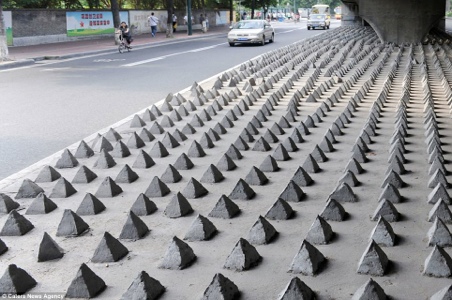
As far as the homeless is concerned – whether they’ve got a home or not, please don’t follow what China has done! Pls read the new report below. That is not the way to solve our homeless sleeping in public places.